Home
›
News
Can WhatsApp be hacked and photos stolen15.09.2026 Individuals seeking to buy virtual sex frequently ask whether their WhatsApp accounts can be hacked and their intimate photos stolen. The concern is valid. The intersection of personal intimacy and digital communication creates a distinct threat surface. However, the mechanism of compromise often diverges from popular assumption. Understanding the actual vectors of attack is essential before engaging in any sensitive exchange. 
The architecture of WhatsApp encryption
WhatsApp employs the Signal Protocol to provide end-to-end encryption for messages and media. This cryptographic framework ensures that data traversing the network is unreadable to intermediaries, including Meta's own servers. Each message is encrypted with a unique key held only on the communicating devices.
Direct server-side interception of a specific chat by a criminal gang is highly improbable. The cost and technical sophistication required to break end-to-end encryption at the protocol level place such attacks firmly in the domain of state-sponsored actors, not typical extortionists. Therefore, when photos are stolen, the breach almost never occurs in transit. The vulnerability lies elsewhere.
Where the actual compromise occurs
If the transport layer is secure, the threat shifts to the endpoints: the sender's device, the receiver's device, or the associated cloud backups.
Cloud backup exposure
WhatsApp permits backing up chat histories to Google Drive or iCloud. These backups are not protected by the Signal Protocol's end-to-end encryption. They rely on the cloud provider's encryption, which is often tied to the user's account credentials. If a threat actor gains access to a user's cloud account—through credential stuffing, phishing, or a weak password—they can retrieve the entire chat history, including media. This is a common vector for data leakage that bypasses the app's core security.
Device-level access
Malicious software, often categorised as stalkerware or spyware, installed on a device can read screen contents or access the local WhatsApp database before encryption applies. Physical access to an unlocked phone yields the same result. A brief moment of opportunity allows an attacker to extract media directly from the device's file system.
The recipient as the endpoint
The most common endpoint failure in the context of virtual sex is the person receiving the image. Once a photo is transmitted, the sender surrenders control over the recipient's device. The recipient can screenshot the image, use a secondary camera to photograph the screen, or save the media to their local storage. No cryptographic protocol can prevent a determined recipient from capturing displayed media.
Social engineering in virtual sex transactions
The phrase "buy virtual sex" implies a transactional encounter, often arranged online with unknown parties. This environment is susceptible to social engineering, specifically sextortion.
Attackers create convincing personas to lure targets into sharing explicit media. The interaction typically pivots to WhatsApp due to its perceived privacy and ubiquity. Once the attacker possesses the compromising images, the transaction shifts. They threaten to distribute the photos to the victim's contacts—often extracted from the victim's profile or linked social media accounts—unless a ransom is paid. 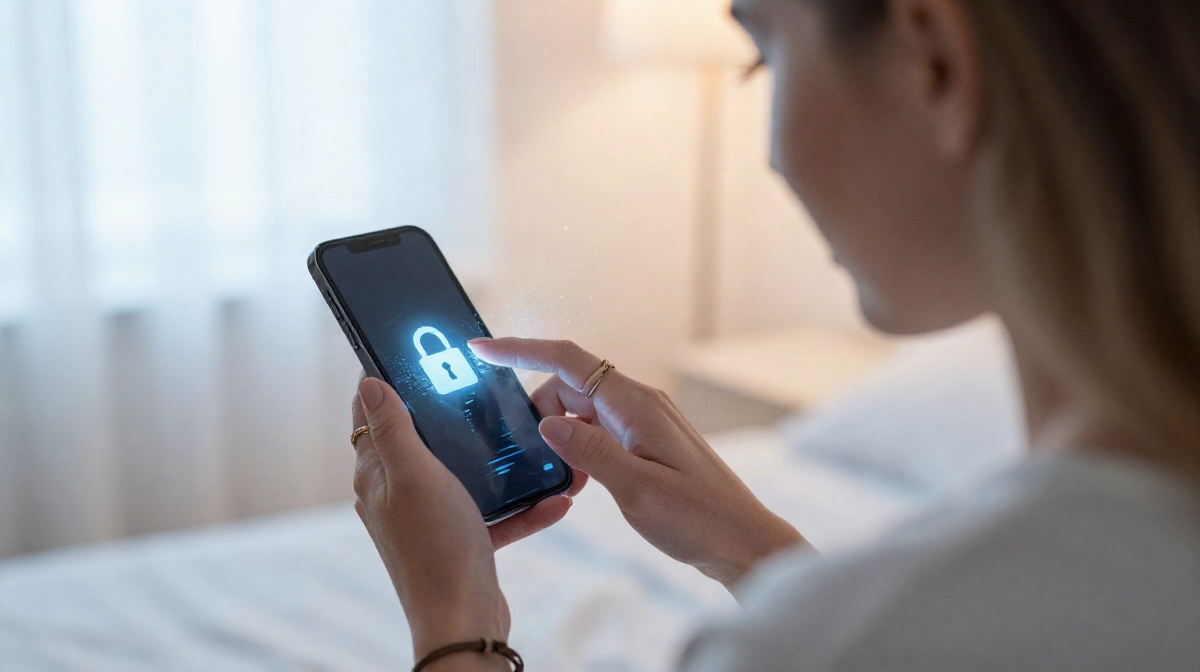
This process does not require "hacking" WhatsApp. The victim willingly sent the material. The attacker simply exploited the trust and the transactional nature of the encounter. The perceived safety of the platform lent false confidence to a risky exchange.
Evaluating WhatsApp's built-in protections
WhatsApp has introduced features intended to mitigate these risks, though their efficacy varies depending on the threat model.
- View Once: This feature allows users to send media that disappears after a single opening and cannot be forwarded or saved directly within the app. However, it does not prevent the recipient from taking a screenshot or using a secondary device to capture the screen. It reduces casual saving but cannot guarantee secrecy against a determined adversary.
- Disappearing messages: Enabling disappearing messages limits the persistence of data in the chat history. Yet, the same endpoint caveats apply. Media saved externally persists beyond the chat thread's expiration.
- Two-step verification: Adding a PIN to the account prevents unauthorised registration of the phone number on a new device, thwarting SIM-swap or account-takeover attempts. This secures the account itself but does not protect media already sent to a malicious contact.
How to mitigate photo theft risks
To engage in sensitive transactions with reduced risk, specific technical and behavioural adjustments are necessary.
- Disable cloud backups: If chat histories are not uploaded to Google Drive or iCloud, that significant attack vector is removed. Accept the loss of chat history as a trade-off for enhanced security.
- Enable two-step verification: Secure the WhatsApp account against hijacking by setting a unique PIN that is not used on other platforms.
- Audit device security: Ensure no stalkerware is present. Use strong device lock credentials and do not leave devices unattended around untrusted individuals.
- Conceal your network: Limit who can see your profile photo, status, and "last seen" timestamps. If an extortionist cannot identify your social circle, their primary leverage evaporates.
- Assume endpoint compromise: Never transmit explicit media to an unverified party under the assumption that end-to-end encryption or View Once provides absolute protection. The recipient is the weakest link.
How to respond to an extortion attempt
If an individual attempts to extort money using stolen photos, the response dictates the outcome. Panic often leads to decisions that exacerbate the situation.
Payment does not guarantee deletion. It frequently marks the target as compliant and capable of paying, leading to further demands. Cease communication immediately. Block the account on WhatsApp and, if possible, report the number to the platform.
Adjust privacy settings to hide the contact list or temporarily deactivate the account. This denies the extortionist immediate access to the threat surface—the victim's professional and personal network. In many jurisdictions, sextortion is a criminal offence; reporting the incident to law enforcement may be appropriate, though victims often hesitate due to stigma.
The actual threat surface
The question of whether WhatsApp can be hacked and photos stolen during—or as a result of—a virtual sex transaction requires separating the protocol from the human element. The encryption protocol remains robust; the human endpoints do not. Photos are stolen not because WhatsApp's cryptography fails, but because cloud backups are exposed, devices are physically compromised, or recipients act maliciously. Securing the device, disabling backups, and treating any unverified recipient as a potential adversary are the only reliable defences.
[ return to top ]
|


